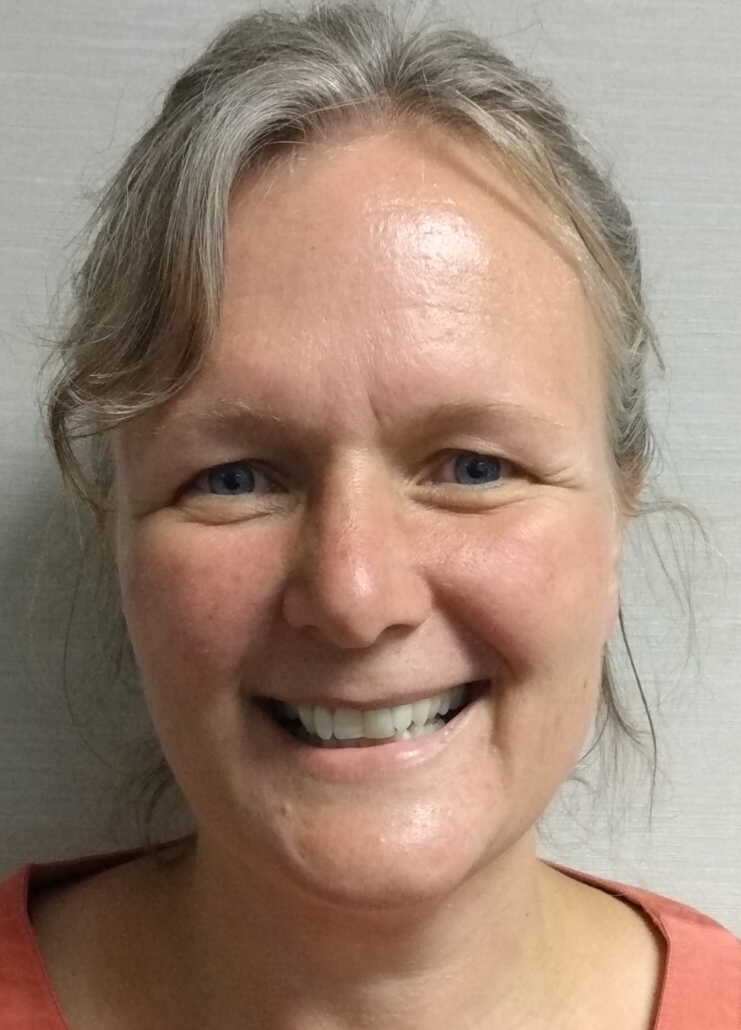
CASA Advocate Amy Moses

When Amy Moses first became a Court Appointed Special Advocate (CASA) in 2001, she didn’t realize what an important part of her life it would become. Over two decades later, after stepping away to raise and homeschool her daughters, she has returned to the role — and she’s reminded every day why she felt called to it in the first place.
“I always, always knew that I would return,” Amy says. When her children went off to college, it felt like the right time to step back in. Amy’s experiences reveal not just what it means to be a CASA, but how deeply one volunteer can impact children and families navigating the most difficult circumstances.
Amy’s first case after returning involved a little boy, whose life had been disrupted by domestic violence and substance misuse. “At the beginning, I definitely felt like there was a lot of trauma going on with him,” says Amy. “He had seen a lot over the years. There was no routine or structure for him.”
As a CASA, Amy walks alongside the child and his family, showing up for visits, attending court hearings, and working with the adults involved in his life. Slowly, she has watched this boy begin to flourish.
“The boy on this case reminds me of my grandson,” she says with a smile. “He has so much energy, and he’s all over the place, and isn’t scared of taking risks. He rides his bike all crazy and wants to jump off of everything. But he’s a really sweet boy, and very kind.”
Preschool became a turning point for the boy. “Once he started preschool, he really blossomed,” Amy explains. “They weren’t even sure if was going to be ready for kindergarten. Now, he’s so ready.” Amy has seen how well he gets along with his peers and says he’s thriving.
Amy has also seen growth in the boy’s parents. Although they separated, they are learning how to co-parent and work together on a routine for their son. As the case nears closure, Amy can see progress in the form of real, meaningful change.
“At the most recent visit I had, it was the first time dad and grandma didn’t complain about mom. That was a big improvement. I know it sounds silly and like something really simple, but that was huge. Every time I visited, they had a list of complaints. So, this shows the case is really moving along well, and that everyone is getting along better and learning how to communicate better.”
The beginning of a case is always the most time intensive. Once Amy got through the first few months of her case, she accepted a second one advocating for another boy, this one in elementary school. His life has been marked by ups and downs, bouncing between living with his parents and his grandmother. The parents have struggled with substance misuse and mental health challenges.
“The child is placed with his grandmother at the moment. He was placed there, returned to the parents, and then placed there again because things weren’t going well,” she says. “So that case has been really up and down. “
The boy has a speech impediment and has struggled academically. But he also has a boundless energy and a deep love of play. For Amy, connecting with him meant stepping into his world.
“He always wants to play tag, or kickball, or show me his toy cars,” she says. “His mom said to me that he really looked forward to me coming over because everyone else would just come and talk, but I would come and play.” It touched Amy deeply to hear this, and demonstrated to her how meaningful her visits were to this child.
Amy’s consistent visits became a bright spot in the boy’s life. She saw firsthand how stability with his grandmother helped him. “Before, he wasn’t getting to school every day, or he was really late because his parents were sleeping in, and they were allowing him to stay up really late playing video games,” Amy explains. “There was very little structure. Now his grandmother has him in a routine. His attendance has been great, he’s doing so much better.”
For Amy, these small but significant changes are what CASA is about. It’s about being present, building trust, and seeing those positive shifts.
In working with the parents on her cases, Amy has experienced both resistance and breakthroughs. She remembers one difficult meeting when a mother declared she didn’t like Amy and wanted a new CASA. “I was stunned,” Amy recalls. “I didn’t know why. Maybe she just needed someone to lash out at, and I was the one.”
But Amy didn’t give up. Over time, she kept showing up, and eventually the mother’s attitude changed. “I’ve really built up that trust with the mom. I had a visit with the child and the mom a couple months ago, and by far that was the best visit I’ve ever had. The mom was so open, welcoming, and chatty.”
As Amy explains, “We’re there for the kids, but we can’t be against the parents. It doesn’t work for the overall outcome.”
Something Amy didn’t anticipate when becoming a CASA was the way it would shift her view of others. “The CASA instructors talk a lot in training about not being judgmental and not letting your own convictions speak for you. You have to be more open; you have to be more understanding. And that definitely carries through into your everyday life.”
Amy plans to continue volunteering as long as she can. She balances a busy life running a family farm, raising Golden Retrievers, gardening, preserving food, and spending time with her husband, daughters and grandsons. But CASA remains a priority.
What makes CASA powerful, Amy believes, is that each volunteer brings something unique. “We all have a different story. That’s what makes this so special,” she says.
If you would like to become a CASA volunteer advocate and help children, consider attending an upcoming virtual information session to learn more, or submit an application today.