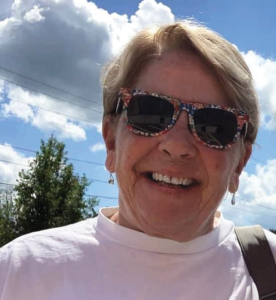
CASA Kristy Jobin on Why She Volunteers

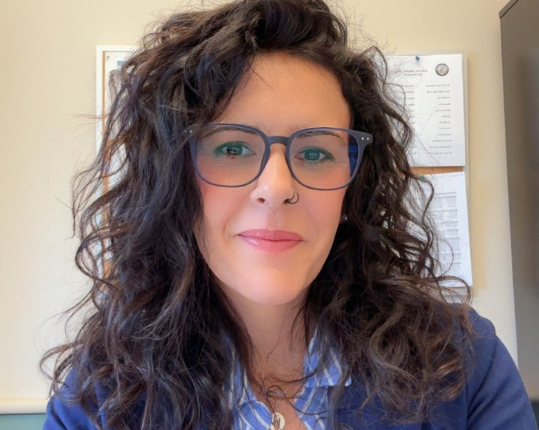
I’m a Bow resident, a wife, and a mom, and community is truly at the heart of everything I do. Professionally, I serve as the Director of Community Development for the Town of Amherst, where my work centers on planning, housing, and fostering strong, sustainable communities. Outside of my career, volunteering is a meaningful part of my life. In addition to serving as a Court Appointed Special Advocate volunteer, I’m involved with several nonprofits, including Costumes for Courage and Ronald McDonald House, and I serve as a board member for a local nonprofit booster club. I believe strong communities are built when we show up for one another, especially for those who need us most.

CASAs are trained community volunteers appointed by a judge to advocate for children who have experienced abuse or neglect. The work of a CASA is essential, not just for children, but for our entire community.

There’s a common belief that child abuse and neglect are primarily urban issues. Many people assume these problems happen “somewhere else.” That is simply not true. It’s right here, existing quietly in cities and towns all across New Hampshire. Abuse, neglect, substance misuse, domestic violence, and family instability are not restricted by income levels, ZIP codes, or school rankings. These challenges exist in every community, including ones that look stable and affluent on the surface. I have personally served on a case in my own community; the place I call home. That experience completely changed my perspective. It reminded me that children in crisis can be sitting in any classroom, on any sports team, in any neighborhood. CASA ensures that no child becomes invisible just because their struggles are behind closed doors.

When a child enters the child protection system, there are attorneys, social workers, foster families, therapists, many adults involved. But those professionals often have high caseloads and shifting assignments. A CASA is different. A CASA is one consistent adult, focused on only one case at a time, appointed specifically to represent the child’s best interests. We get to know the child, talk with teachers, therapists, foster parents, and biological relatives when appropriate. Then we make independent recommendations to the court about what that child needs to be safe, stable, and supported. We are often the only consistent person in a child’s life during an incredibly unstable time.

I’ve been with a sibling group for four years. Four years of court hearings. Four years of uncertainty. Four years of watching children walk through some of the hardest moments imaginable. But I’ve also had the incredible privilege of watching them heal, grow, and thrive. They are now in a loving, supportive, pre-adoptive home, the kind every child deserves.

One of the moments I will never forget was when their therapist asked them to draw a picture of their family. When I learned that they had drawn me in that picture, I was overwhelmed. To know a child who has been through so much sees you as part of their safe world, there are no words for that. Another such moment was at a soccer game. One of the kids and I were playing, and a teammate ran over and asked, “Who are you playing with?” He looked up at me with the biggest smile and said, “This is my special friend, Kristy.”

I’ve been there for their hardest days, and now I get to see their joy, their confidence, their sense of safety returning. I have a photo of one of them at kindergarten graduation, and I truly believe one day I’ll have a similar photo at high school or even college graduation. That continuity, that long-term presence, is what CASA is about.

I won’t pretend this work is easy. It’s one of the most challenging things I’ve ever done. Sometimes outcomes take longer than you hope. Sometimes progress comes in small steps. But I know, without a doubt, that my involvement has made a meaningful difference in these children’s lives. And just as importantly, it has changed mine. It has given me a deeper understanding of resilience, of trauma, and of how powerful one consistent, caring adult can be.

CASA volunteers are community members, neighbors, parents, retirees, professionals, who step up to be a child’s voice. You do not need prior experience in social work, law, or child services. CASA provides comprehensive training, ongoing staff support, and mentorship from experienced volunteers. What you do need is a willingness to learn, reliability, and a heart for helping vulnerable children. These children don’t need superheroes. They need steady, caring adults who will show up.

Children in foster care are often navigating the most difficult chapter of their lives. A CASA helps ensure that chapter leads to safety, stability, and hope. If you’ve ever wondered how one person can truly make a difference, this is one of those ways. Be their voice. Be their consistent person. Be the one who shows up. I’m so glad I did.

CASA Advocate Amy Moses

Photo of Amy M.

When Amy Moses first became a Court Appointed Special Advocate (CASA) in 2001, she didn’t realize what an important part of her life it would become. Over two decades later, after stepping away to raise and homeschool her daughters, she has returned to the role — and she’s reminded every day why she felt called to it in the first place.

“I always, always knew that I would return,” Amy says. When her children went off to college, it felt like the right time to step back in. Amy’s experiences reveal not just what it means to be a CASA, but how deeply one volunteer can impact children and families navigating the most difficult circumstances.

Amy’s first case after returning involved a little boy, whose life had been disrupted by domestic violence and substance misuse. “At the beginning, I definitely felt like there was a lot of trauma going on with him,” says Amy. “He had seen a lot over the years. There was no routine or structure for him.”

As a CASA, Amy walks alongside the child and his family, showing up for visits, attending court hearings, and working with the adults involved in his life. Slowly, she has watched this boy begin to flourish.

“The boy on this case reminds me of my grandson,” she says with a smile. “He has so much energy, and he’s all over the place, and isn’t scared of taking risks. He rides his bike all crazy and wants to jump off of everything. But he’s a really sweet boy, and very kind.”

Preschool became a turning point for the boy. “Once he started preschool, he really blossomed,” Amy explains. “They weren’t even sure if was going to be ready for kindergarten. Now, he’s so ready.” Amy has seen how well he gets along with his peers and says he’s thriving.

Amy has also seen growth in the boy’s parents. Although they separated, they are learning how to co-parent and work together on a routine for their son. As the case nears closure, Amy can see progress in the form of real, meaningful change.

“At the most recent visit I had, it was the first time dad and grandma didn’t complain about mom. That was a big improvement. I know it sounds silly and like something really simple, but that was huge. Every time I visited, they had a list of complaints. So, this shows the case is really moving along well, and that everyone is getting along better and learning how to communicate better.”

The beginning of a case is always the most time intensive. Once Amy got through the first few months of her case, she accepted a second one advocating for another boy, this one in elementary school. His life has been marked by ups and downs, bouncing between living with his parents and his grandmother. The parents have struggled with substance misuse and mental health challenges.

“The child is placed with his grandmother at the moment. He was placed there, returned to the parents, and then placed there again because things weren’t going well,” she says. “So that case has been really up and down. “

The boy has a speech impediment and has struggled academically. But he also has a boundless energy and a deep love of play. For Amy, connecting with him meant stepping into his world.

“He always wants to play tag, or kickball, or show me his toy cars,” she says. “His mom said to me that he really looked forward to me coming over because everyone else would just come and talk, but I would come and play.” It touched Amy deeply to hear this, and demonstrated to her how meaningful her visits were to this child.

Amy’s consistent visits became a bright spot in the boy’s life. She saw firsthand how stability with his grandmother helped him. “Before, he wasn’t getting to school every day, or he was really late because his parents were sleeping in, and they were allowing him to stay up really late playing video games,” Amy explains. “There was very little structure. Now his grandmother has him in a routine. His attendance has been great, he’s doing so much better.”

For Amy, these small but significant changes are what CASA is about. It’s about being present, building trust, and seeing those positive shifts.

In working with the parents on her cases, Amy has experienced both resistance and breakthroughs. She remembers one difficult meeting when a mother declared she didn’t like Amy and wanted a new CASA. “I was stunned,” Amy recalls. “I didn’t know why. Maybe she just needed someone to lash out at, and I was the one.”

But Amy didn’t give up. Over time, she kept showing up, and eventually the mother’s attitude changed. “I’ve really built up that trust with the mom. I had a visit with the child and the mom a couple months ago, and by far that was the best visit I’ve ever had. The mom was so open, welcoming, and chatty.”

As Amy explains, “We’re there for the kids, but we can’t be against the parents. It doesn’t work for the overall outcome.”

Something Amy didn’t anticipate when becoming a CASA was the way it would shift her view of others. “The CASA instructors talk a lot in training about not being judgmental and not letting your own convictions speak for you. You have to be more open; you have to be more understanding. And that definitely carries through into your everyday life.”

Amy plans to continue volunteering as long as she can. She balances a busy life running a family farm, raising Golden Retrievers, gardening, preserving food, and spending time with her husband, daughters and grandsons. But CASA remains a priority.

What makes CASA powerful, Amy believes, is that each volunteer brings something unique. “We all have a different story. That’s what makes this so special,” she says.


If you would like to become a CASA volunteer advocate and help children, consider attending an upcoming virtual information session to learn more, or submit an application today


CASA Advocate Keri Boyd

Life often takes us to unexpected places. Twists, turns, and forks in the road can bring us to destinations far different than we ever anticipated. And yet other times, where we end up seems like destiny—it makes so much sense, we can’t imagine ourselves anywhere else. When Court Appointed Special Advocate (CASA) Keri Boyd thinks back, it feels as if her heart was planted on the path to helping children right from the start.

“I have always had a passion for foster children, it’s always been near and dear to my heart,” says Keri. “My grandmother’s best friend and neighbor ran a foster home. In the summers, when my grandmother had me over to visit, there were always new children to play with. My college entrance essay was actually about Mary and her foster home, and my experience of meeting these children. I have such fond memories.”

Years later as an adult with a fulltime career, Keri heard about CASA of NH from her mother, who was looking into volunteering. “I just wasn’t in a place to foster or adopt, so this fit into my lifestyle. I could speak on the best interests of children who are in the foster care system. That’s how this all pieced together.”

When advocating for a child, many times the CASA volunteer is the one caring, consistent adult in that child’s life. Over the duration of the case social workers, living placements, and other points of contact might change. But the CASA is always there, showing up when they say they will, and speaking up for what is in the child’s best interest for today, and for their future.

Keri takes this responsibility seriously. “I call them my CASA kids, or my CASA babies. I treat them as my own, and how I would want my own child to be treated. I’m a CASA mama bear, I’m fierce for them. I want them to be protected, and healthy and safe, and I want them to be able to dream big. However I can get that for them, that’s what I want for them. I want all those things.”

Not long ago, Keri had a chance to see the culmination of her fierce advocacy. “I recently went to my first adoption proceeding,” she recounts. “It was such a positive experience. It was such an honor and privilege that they included me, and to watch the process. The mother had already adopted two older children, and they were all dressed up in their matching outfits. My CASA child had a little sign, and they had a photographer, and we all went out to eat after. It was really nice to be included, and it was a very special moment. It was a long and tough case, over two years, and it was nice to see such a positive outcome for this child.”

CASA of NH staff member Brendon Jalbert, who advises and supports Keri as her Advocate Supervisor, sees the dedication she puts into her casework. “Keri is so passionate about her kiddos, and knows her cases better than anyone else,” he says. “She is one of the gold standards for CASA. Very detailed, passionate and a steadfast advocate for her kiddos.” These are the qualities, not any special background or training, that make for a first-rate advocate. For those who, like Keri, have a heart to help children, CASA of NH’s comprehensive training provides all the additional knowledge and skills needed.

Six years on, Keri couldn’t be happier with her decision to become a CASA. “This role is a blessing,” she says. “If you want something that gives so much value for the effort you put in, and you want to really help someone, this is the place to be. To be the voice of children is invaluable. If you have the time to do this, it’s priceless.”


If you would like to become a CASA volunteer advocate and help children, consider attending an upcoming virtual information session to learn more, or submit an application today


CASA Advocate Judith Kumin

In 2012, Judith Kumin closed the book on a 35-year career spent living around the globe working for the United Nations Refugee Agency, and moved to New Hampshire to care for her aging parents. Similar to turning the final page of a familiar novel and cracking open the binding on a new story, Judith wanted to find new pursuits that would be meaningful and engaging. For her, this meant continuing to be involved in social issues and helping others. Supporting children in the child protective system as a Court Appointed Special Advocate, and tutoring high school English language learners are the ways in which Judith has found fulfillment in this latest chapter.

“When I worked for the UN,” says Judith, “I was involved in big programmatic issues, policy issues, running huge programs, like the whole refugee program in the former Yugoslavia during the war.” As a tutor and volunteer child advocate, Judith says, “Now, the work I do is on a more micro level.”

By working with a child or youth one-on-one, Judith has the opportunity to build relationships and help in a whole new way. “Being able to be kind of an anchor for children is meaningful. It’s not true in all cases, but I’ve had some where a real connection has been made. I would say a connection for life, where I’m interested in what happens with these children. Their cases have long been closed, but they’re interested in keeping me informed of their lives. That’s very gratifying. You’ve seen them through a really tough time, and now they’re launched and sharing their achievements with you for no reason other than that you made a bond years ago.”

Judith says one of the most rewarding cases she’s advocated on involved two siblings who had experienced extreme trauma. During the case, the children were placed in a respite home while arrangements were being made for their adoption into a different home. The siblings had not yet met the family that was set to adopt them, and in the meantime, as Judith puts it, “The children and the parents in the respite home fell in love with each other.”

Judith explains, “The respite parents were certified adoptive parents and had already adopted one child. I don’t know how to describe it, but it was like the kids walked in the door and they had found their home. When DCYF told them they were leaving to go to a pre-adoptive home, the children refused. So, I talked to the kids, and I talked to the respite parents, and I told them, ‘I am going to argue as hard as I can for you to stay here, because I can see that it’s just as if you were born into this family.’

As promised, Judith kept pushing, and in the end DCYF agreed and the children were very quickly adopted by the respite family. “That was years ago, but they’ve stayed in touch. I was invited to one of their high school graduations, and the adoptive mom sends me family updates on vacations and school events.

“It might have worked out with the family DCYF chose for the children, but it might not have. Yet this was a match made in heaven, they just were right for each other, you could feel it and see it. These were the most articulate kids I have ever met, and I’m a teacher, so I’ve met a lot of kids. These kids were really adamant and advocated for themselves, and they needed someone to take their side and fight for them. That was probably my most gratifying case.”

Judith encourages others to consider volunteering as a CASA. She says, “There’s a world of difference between reading about the case on paper and getting to know the child through years of visits, court hearings, and phone calls. It’s a really fascinating field of law, but it’s also a fascinating field of social policy, and it’s a chance to make a difference. Explore it. And if you decide it isn’t for you, there’s no shame in that. But if you decide it is for you, it’s probably going to end up being a long-term commitment.” In Judith’s case, a 12-year commitment, and one she has no plans of stopping.

During her lengthy and remarkable career, Judith worked with many volunteer organizations in all parts of the world. “I’ve never encountered a situation like this,” she says, “where a nongovernmental organization recruits volunteers who are professionals, and they’re trained and treated like professionals, not just by the organization but by the state. It’s written into the law that we’re a full party to the case. That is a really remarkable model, and I don’t know if it’s replicated in any other agency. I think it’s a terrific way to make use of the huge range of knowledge and skills that’s out there. I’m always impressed at gatherings of CASAs to see what everybody brings to the table.”

For all the places Judith has worked and called home, how fortunate it is that she found her way to CASA of NH. The lives of the many children she’s worked with are truly better for it, and she’d heartily agree that so is her own.


If you would like to become a CASA volunteer advocate and help children, consider attending an upcoming virtual information session to learn more, or submit an application today


CASA Advocate Dorothy Piquado

It’s trivia time. What connection do Sierra Leone, Lebanon, Iran, Brazil, Indonesia, Egypt, Ecuador, and China all have with Court Appointed Special Advocates ofDorothy Piquado New Hampshire? Amazingly, these are all places CASA volunteer Dorothy Piquado and her husband John taught during their 37-year careers as educators. During many of these years they had their own children in tow. (Not many people can say their children’s graduation ceremonies were held at the pyramids, and that their high school diplomas are printed on papyrus!)

After decades of working with young people all across the globe and raising her own children, Dorothy craved something meaningful to do in retirement. Thirteen years in, it’s safe to say she’s found the perfect fit at CASA of NH.

“I love learning, I love meeting people, and I love helping,” says Dorothy. “When we were teaching, my husband and I taught at the same school. We’d have a meeting, and someone would start talking about a committee they wanted to form to do this or that, and my husband would say, ‘Dorothy, sit on your hands.’ That’s just me, I like to be involved in things. I don’t like to sit on my hands.”

This certainly applies to Dorothy’s efforts as a CASA. In addition to serving on three cases (the maximum caseload allowed to ensure CASA children receive ample attention and CASA advocates don’t burn out), Dorothy supports her fellow volunteers as a Peer Coordinator, and helps spread the word of CASA’s mission any chance she gets.

Dorothy is the first to reassure a CASA peer during a rough time, or encourage a neighbor (or complete stranger) to think about volunteering. Having advocated for dozens of children and counting, she’s aware of the pain, fear, and uncertainty the children have experienced. She knows the struggles parents face on the road to overcoming their missteps. But her enthusiasm for this role never falters because she’s seen time and again how her contributions have helped bring about happy endings for children and families.

A case of Dorothy’s that illustrates this involved a child who was born while his parents were in prison. The grandmother was taking care of the infant, but ended up being charged with a legal infraction herself. “Over the course of the next two years,” Dorothy says, “this grandmother was not giving up. She stayed in that child’s life, she wanted that child. Accusations were made against her, but she handled them, she was determined.”

During this time, the child also had contact with his father. As the child’s advocate, Dorothy would sometimes attend the visits. “One day when the child was 18 months old,” she recalls, “I went to the prison to see him visit his dad. They made them visit with glass between them and only the telephone to communicate through. I watched this young father, all he had was a piece of paper, and with that baby sitting there on the counter, he entertained his child for a solid hour with nothing but that piece of paper. I couldn’t believe it. That child was happy. That showed me that you can be in jail and be a good dad.”

The abundant love and steadfast resolve shown by both the child’s father and grandmother were the proof Dorothy needed that she should advocate for the child to be permanently reunited with his grandmother.

“Long story short,” she says, “the child is now with his grandparents. I am still in that child’s life, they view me as family. I’ve been to every one of his birthday parties. I’ve been invited to and have attended the Christmas party they have in the prison for the families. And it’s such an honor to see that child go to the jail and leap into his father’s arms. And you have never in your life seen a happier child. His father calls him several times a week, and they talk for an hour. And the child visits him every week. Even though his father is in prison, he knows all about his family, and he’s hearing it from them and not from stories told about him on the playground. I know I made the right decision, but I had to fight for it for this child. I’m proud of that case”

“Everybody says that it’s so good that I’m doing this,” continues Dorothy, “but I do it for me. I really do it for me, I’m selfish that way. It’s something I get so much out of. Even though it’s hard sometimes. My joke to myself is, if I didn’t do CASA I’d have to stay home and clean my house – and that’s not a joy. I don’t want my tombstone to say ‘She kept a clean house.’”

For Dorothy, joy has never been about having a perfectly clean home – no matter what country she was in. Joy is about the love within that home. As a CASA, that’s something she experiences when a child is made whole by placement with their loving forever family.


If you would like to become a CASA volunteer advocate and help children, consider attending an upcoming virtual information session to learn more, or submit an application today


CASA Advocate Jane Hoover

We’ve all heard the saying “variety is the spice of life” – and for good reason, it’s true! Variety is what keeps us interested and engaged. It keeps us going, on our toes and looking ahead to the next thing on the horizon. At Court Appointed Special Advocates (CASA) of New Hampshire, the volunteer experience is rife with variety, as 10-year veteran Jane Hoover knows.

As a CASA volunteer, Jane’s primary role is to advocate in court for children who are in the protection system due to abuse or neglect. Jane gathers facts and information to help a judge decide on the best permanent homes for those children. She does this by visiting her case child or children at least once a month, and speaking with the important adults in their lives, including parents, foster parents, health care and service providers, and educators.

With her consistent visits, Jane cultivates a bond that allows the children she represents to grow comfortable and open up to her. Having worked with children of many ages, Jane has decided that infants are her special niche. She says, “We have to establish trust with our CASA children no matter how young they are. My little guy that I have right now, I’ve known since he was four weeks old. I’ve watched his trust level with me grow. He knows me, he comes to me, he asks for support even when his words aren’t clear. Building that level of trust starts from day one no matter how young they are.”

Having been an educator for 37 years, Jane has a deep understanding of children and loves working with them. When she began thinking about retirement, CASA stood out as the perfect way for her to continue to serve children. With her very first case, Jane was hooked.

When thinking back on that case, she says, “It was so meaningful to have that father realize that he had made some bad choices, but he had the capacity to care for his children. Him having that eureka moment and realizing he could do this is what we always hope for.”

During her time with CASA, Jane has served on six cases advocating for a total of 11 children, and has seen that no two cases are the same. This is true for all the cases CASA of NH has been part of. The children and circumstances involved are all varied and unique, and each one presents opportunities for the volunteer to learn and grow. Jane experienced this on her most recent case.

“I always tell current and perspective volunteers that you have to determine your recommendations using your head and not your heart, but during this case I came to the very sudden conclusion that my heart was saying something that was more important than what me head was telling me. That’s when I realized that you do have to use your heart, you just have to use it in the right way.”

Variety exists for CASA volunteers outside of their case work as well. In addition to being an advocate, Jane mentors new volunteers as a Peer Coordinator. And she often appears as a co-host on CASA’s twice-monthly virtual info sessions, where she shares her experience and answers “all those questions you don’t dare ask the staff.”

Other offerings available to CASA volunteers include support groups, copious training opportunities, and social events where advocates and staff take time to recharge with some fun and camaraderie. And, since word of mouth is the number one way new volunteers are recruited, interested CASAs can help spread the word by joining staff at festivals and community gatherings.

From the variety and diversity presented within the cases themselves, to the numerous additional activities volunteers can join in on, the role of the CASA is always fresh and engaging. This is made clear when listening to Jane and other longtime volunteers. No matter the ways they choose to be involved, the passion, energy, and dedication they put into being a CASA only increases.

To learn more about volunteering with CASA of New Hampshire, sign up for a  virtual information session. Jane hopes to see you there!


CASA Advocates Fred Hurwitz and Marc Clement: 30 Years of Advocacy

Picture this: The year is 1993. Gas is $1.11 a gallon and a postage stamp costs 29¢. It’s the year of low-fat everything, and SnackWell’s cookies are in every grocery cart. Ty, Inc. has releasedFred Hurwitz and Marc Clement their first series of Beanie Babies, with offerings including Legs the Frog, Squealer the Pig and Chocolate the Moose. And it’s a golden year at the cinema, with the debut of the “Jurassic Park” franchise, the perennial rom-com favorite “Sleepless in Seattle,” and children’s hits “Aladdin,” “Mrs. Doubtfire” and “Free Willy.” Plus, a movie ticket costs less than $5.
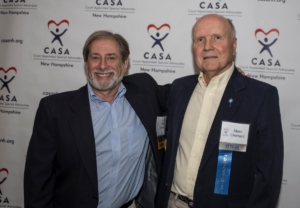
At Court Appointed Special Advocates (CASA) of New Hampshire, another distinguishing event of 1993 is unfolding. A pre-service training class has graduated not one but two advocates who, an astonishing 30 years later, will still be providing their strong and steadfast voices for the children who need them the most.

Fred Hurwitz

Fred Hurwitz, a computer engineer, was drawn to CASA of NH after working on a computer systems project to aid child support enforcement in the state of Michigan. Through this work he learned that in Detroit alone there were 20,000 fathers who were themselves youths receiving child support and having to pay child support to children of their own. He says, “I just fell over hearing that. I thought, ‘but for the luck of the draw,’ and I knew I had to give back. I wanted to be able to contribute in a professional way, and CASA fit the bill for what I was interested in and what I’d be capable of contributing.”

Thirty years on, in addition to continuing work as a volunteer advocate, Fred shares his decades of knowledge and experience with other CASAs in his role as a peer coordinator. The following are a few of the valuable insights he has gained.

“Early on,” says Fred, “I learned that frequently there’s more than one serious problem in the family, often mental illness and drug abuse. That was something I didn’t understand before; just how connected serious issues are and how difficult that was for the person to deal with.”

“A second thing I’ve come to understand is the demands we’re putting on parents – it’s a lot. Case parents have one year to correct [the circumstances that brought the case about], and it’s not a lot of time for people who are to one degree or another experiencing dysfunction.” But as Fred shares with others, “I don’t think I’ve ever not had empathy for the parent, even in the worst case. We’re not looking for perfection at the end of the year. We’re looking for someone who has made a commitment and is making progress.”

Bernadette Melton-Plante, a CASA program director who has worked with Fred for many years, explains why he is so successful at working with both parents and children, saying, “Fred’s attention to detail is remarkable. He leaves no stone unturned in his case work. Fred has a nice knack of asking hard questions in a very non-threatening way. Parents and children alike feel safe with Fred, his soft-spoken voice is calming and reassuring to all.”

Another lesson Fred has learned is the power early intervention has on psychological and emotional healing. “On one case, the youngest of a group of siblings was frequently exhibiting inappropriate sexualized behaviors due to the abuse they had endured. We got the child placed with a very experienced therapeutic foster family. They had gone through lots of training, and they understood how to execute the therapeutic plan. The child, over the course of their time there, slowly continued to improve. Eventually the child was ready to be adopted. At that point we had gotten it down to where there were just minor behavior issues, but the day they moved permanently into their adoptive home those behaviors stopped as well. That day. It was very powerful.”

Fred says, “I ran into the family a few years later. I didn’t notice the child, but they noticed me. They came running up to me, grabbed me around the legs, and told me how happy they were to see me. I was surprised, because I hardly expected the child to remember me. I said that, and the child said to me ‘You were the one who told me I would get a family, and I did.’ It was a very satisfying outcome.”

It is because of this insight that Fred is pushing for more therapeutic services for a child he is currently serving – and due to the respect both Fred and the CASA program have earned over the years, the judge on the case is listening. Normally case review hearings take place every 90 days, but due to Fred’s concern the judge has called for an additional hearing. “I said I’m afraid that we’re going in too light on services, and we’re going to come back for the six-month review and there’s not going to be any progress. And the judge said ‘I agree with you.’ So, in that particular case we’re having a 45-day hearing so we can meet halfway between the review hearings to make sure things are on track.”

This is certainly not the only time Fred’s experience has positively served his case children. He tells about a case that came about during the course of an eviction. “DCYF was called due to the status of the house, and the children were removed over a holiday weekend. The children were afraid when I met with them. I was able to advocate for their return. The issues weren’t that severe, and they could safely be at home while we resolved the problems.” Fred’s competent assessment of the situation helped the scared children to be more quickly reunified with their parents.

Not only is Fred amongst the longest-serving CASA volunteers, he is perhaps the CASA who has served the longest time on a single case. It was also his very first case, and one that would stretch over 18 years. As with all of his cases, Fred gained valuable takeaways.

As Fred explains, “This was before there was such a strong effort as there is now to make sure the cases close in a reasonable amount of time. The children never got adopted, so they just stayed in the system. That stands out in my mind for a number of reasons. Every time I don’t like an outcome (this is the engineer in me), I look back and think what went wrong, and what can I do differently next time.”

He continues, “One of the things I learned was to trust my instincts. I had instincts about certain things, and I pushed them, but now I would push them even harder. The big thing on that case was that the pre-adoptive parents asked the children if they wanted to be adopted, and the children said no. At that point I felt I really understood the children, and my view was that what they were really saying is ‘you’re asking me to turn my back on my mother.’ What we were never able to successfully get across to that family is ‘don’t ask the question’ – start the adoption process, and if the children really don’t want to be adopted, they’ll make it clear. But I think they want to be adopted, and they don’t feel like a full part of your family — they’re tenuous. They could be ousted at any time, because it’s happened to them before. They need to be adopted for that sense of security.”

Fred says, “The idea of permanency was reinforced for me. The outcomes for those kids was not terribly good. They always felt they could be kicked out at any time. I know they felt that way, because they told me. There have since been systemic changes that make it so that case wouldn’t have occurred that way; now we would move the children [to a different adoptive home]. When I talk to newer CASAs or when I’m mentoring someone, I say this is one of the things I’ve learned – how important it is for the kids to know that it’s permanent. That they belong there.”

Fred takes this and all of the lessons he’s learned as a CASA to heart, and generously shares his insights and experience. Whether it’s through his casework, helping to mentor fledgling volunteers or recruit new ones, or in giving financial support, he is an ever-constant boon to CASA’s mission of bettering the lives of children. His current program manager at CASA, Dellie Champagne, sings Fred’s praises, saying, “Fred Hurwitz has never slowed down. He approaches every case with strong determination as he only wants what is best for the children he serves. He has maintained this commitment for 30 years! He is the Energizer Bunny! I love working with Fred, as he pays attention to every detail and his reports are so thorough.” This is high praise indeed, as written court reports are one of the key ways CASAs provide the vital information they gather to the judge.

Fred’s life outside of CASA is full of a variety of interests. He and his wife Sue raised three children and now help provide daycare and afterschool care – along with a cheering section at soccer games – to their seven grandchildren, who range in age from 16 to a one-year-old. For close to 20 years they’ve also trained seeing-eye dogs. Fred says, “We both love dogs, and we were both deprived of dogs as children, so that’s something we enjoy. We train them from eight weeks of age until they’re 18 months old. We’ve always had a dog. The joke is that when we were dating I gave my wife a dog as a gift, and then we had to get married because of the dog.” Having experienced the thought, care and attention to detail that Fred puts into all aspects of his casework, we at CASA have to assume that this was all part of his plan.

Marc Clement

Marc Clement first learned of Court Appointed Special Advocates of New Hampshire by way of a notice in his church’s bulletin. As a child psychologist and professor at Colby-Sawyer College, where he taught for 35 years, Marc felt called to this volunteer opportunity as one that would befit him both personally and professionally.

Marc says, “I teach courses on child abuse, neglect, domestic violence and then the usual psychology courses. CASA work fits in nicely with what I teach, and it helps me be aware of the types of organizations and agencies that provide services for children. Representing the best interest of children in the courtroom is enlightening for my courses — it keeps me up-to-date on what was going on in the legal aspect of child abuse and neglect.”

Personally, Marc says, “It also satisfies a need that I have to give back to people who have had a bad break in life and who don’t have the resources that I may have. I think I can help people, I can help children. I sort of live by the motto of to whom much is given, much will be expected. I had a very enjoyable childhood, I had a good family, and I felt that I was very fortunate as a child. Clearly a lot of children don’t have that. So, anything that I can do in the CASA realm, I appreciate the opportunity to do it.”

In his time as a CASA Marc has supported dozens of children. While every case has its own special moments, a case that ended somewhat recently stands out to Marc, as he served the child on it for many years. Marc says, “This case was very gratifying, because it ended in an adoption for a teenage boy. Teenagers are hard to place sometimes.”

Marc explains that the child was abandoned by both parents, briefly reunited with the mother, but ultimately abandoned again. The boy was then moved through a variety of foster homes and group homes. During this time Marc was a consistent presence in this child’s life. He regularly visited the boy and learned about the circumstances of the case, kept the judge informed of vital information, and made recommendations on what was in the boy’s best interests.

But time doesn’t stop for children during these cases. And so along with his professional work on the case, Marc was also there personally for the child as he grew into a youth, from providing advice on buying flowers for a date to the school dance, to being the voice on the other end of the first personal phone call the boy had ever received.

Ultimately the happy moment came when the youth was matched with the right family for him. Marc says, “They enjoy a lot of the same things that this boy enjoys, and he has a lot of opportunities. They all enjoy sports, and they have the resources to put him in a school that is a good fit for him. He lived with them for a year and maybe a couple months, and then they adopted him. It was fantastic, for me and for the social worker who worked on that case for probably six or seven years.”

Marc’s CASA program manager, Mark Rissala, worked alongside him during the completion of this case. He says, “Marc is compassionate and advocated in a supportive and effective manner for this boy. He knows and understands this youth well, which he clearly expressed to the court. Marc never wavered in his support and stayed with this boy until he was adopted into his forever home.”

Through the years Marc has shown he can be counted on to help wherever the need is. This includes working on particularly tough cases involving sexual abuse, where his background makes him especially valuable. But, as with many CASAs, there is an age group that he is especially fond of working with. He says, “The cases that I particularly like are the ones with infants and toddlers. It’s my area of expertise. My training and doctoral work was with younger children, so that’s what I like and I think I do a very good job with that.”

He continues, “I like to have those kids because they’re in a critical period of development, and I think if you can intervene at that age and modify or repair the damages that have occurred, I think those children have a better chance in life. And sometimes it’s easier working with those parents. A lot of times with parents of infants and toddlers, they simply don’t know what to do. You know, we don’t have any training for parents. If you have a child you have a child, there’s no license or requirements. I think some young people have children because they’ve had a rough life, they haven’t been successful in lots of different things, and they think the one thing they can be successful with is to have a child. They think nobody loved me and now my child is going to love me. But of course, it doesn’t work that way. I haven’t met many parents who really want to hurt or neglect their children. They just don’t know what to do. So, if they can get into training programs where people help them that can have a significant impact on their children.”

In reflecting on his long service as a CASA, there are a couple of things that Marc has found particularly rewarding. “One is personal,” he says. “It satisfies a need and a desire I have to give back. Also, no matter how the case goes, I always get the sense that what I’m doing is improving the life of this child. Permanency is the goal. Sometimes it takes a lot longer than you hope it would take, but as long as the child is safe, as long as the child is progressing in a happy environment, I feel like I’m doing what I need to do.”

Marc’s work supporting the wellbeing of children extends far beyond his role as a CASA volunteer. For 26 years he has chaired and co-chaired the New Hampshire Child Fatality Review Committee through the DOJ and now DHHS. “It’s a pretty high-powered committee,” he says. “It includes the chief medical examiner, people from DHHS, law enforcement, other medical personal, and the head of DCYF. We review the deaths of children who died from unnatural or preventable causes, then work on recommendations to try to reduce the probability of these deaths occurring in the future.”

In July Marc was recognized for his monumental contribution on the committee when he was awarded the Theresa Covington Award for Excellence in Child Fatality Review at the annual Safe Kids Worldwide Childhood Injury Prevention Convention (PrevCon).

Marc spends his personal time with family, friends and in the garden. A grandfather of five, he is often taking part in family activities. He and his wife Patricia also travel, he says, “usually in conjunction with visiting friends and family.” And while at home, you’ll find Marc in his large vegetable garden, “fussing around” developing new flower beds with his wife, or in his lupine nursery. Whether it’s friendships, vegetables and flowers or children, Marc is a constant nurturer, helping all he encounters to grow and thrive.

If you would like to become a CASA volunteer advocate and help children, consider attending an upcoming virtual information session to learn more, or submit an application today


CASA Advocate Molly Ellis: Nonstop From the Friendly Skies to CASA of NH

Molly EllisShe came from the skies, bringing her steadfastness, intellect, and sweet disposition along with her. She knew there was a chance of storms ahead, but still she came to help children in their time of need. In the movies, this person would be holding an umbrella and a carpet bag that was inexplicably bigger on the inside. In real life, she’s even better.


Before becoming a Court Appointed Special Advocate (CASA), Molly Ellis spent her career up in the clouds – literally – as an on-the-go flight attendant. When she first saw a newspaper article about CASA, she was a young college student, still moving around. But what she read stuck with her. Years later, when planes were grounded and travel was forced to a halt due to COVID, Molly used that time to take her preservice training and begin a new journey, volunteering her time to advocate for children.

As soon as Molly started her CASA training she knew she had made the right decision. “I really appreciate the rigor of the training,” she says. “I hope that’s something that would be encouraging to people who are considering becoming a CASA. I feel like it really gives you a solid foundation to feel a little more assured when you’re going into this. For a lot of people, we don’t have any background with what these cases involve. The training gives you the framework for working on a case, and knowing what concrete steps you could recommend to benefit the child.” 

She continues, “It feels really good knowing you’re not just going to show up and read a little leaflet and be expected to jump right in. You feel really supported.” 

Molly has engaged in a number of the learning opportunities available to CASAs beyond the initial training. “If you have a case with older children, there’s a separate training on working with older youth. There are continuing education courses offered to CASAs free of charge through Granite State College. Those classes are for foster parents and social workers as well, so you get to hear their perspectives too. Once you get started you see that there are all these other learning opportunities you can take advantage of. So it’s not like you need to learn everything right from the get-go.”

Of course, all the training and prep-work that CASAs do is in service of one ultimate goal: ensuring that children who have experienced abuse or neglect are seen and heard, so that they can reach the best safe, permanent, loving home for them. Of this Molly says, “It’s such a powerful way to be involved in a child’s life. These are literally almost life-and-death decisions — and maybe they are life-and-death decisions that the court is making for these children’s lives. To be able to speak to the court and advocate for the child’s best interest after you’ve done the work of getting to know that child and learning about their life is so powerful.”

Volunteers often report personal benefits they’ve experienced as a CASA. For Molly, she says, “I love that it draws on skills that I don’t use anymore. I don’t do a lot of note taking or writing in my regular life. I’ve really enjoyed that part of it. To me it’s been really great to engage that part of my mind again. That’s been fulfilling.”

This is not to say that there aren’t formidable times as well. When asked about her challenges, Molly replies, “Teenagers. Teens are tough, man! Like, I was homeschooled in high school, so I feel like teenagers are this foreign, scary thing and they’re just so intimidating. So, for other CASAs out there, please don’t feel limited by your personal skills. You just kind of have to keep plugging away and keep being there and being supportive.”

She continues, “The teenagers, they sort of have their own lives. They’re a little bit hostile at first. They see it as an intrusion in their lives — which it is, it’s a big intrusion!” An intrusion that Molly understands was necessitated through no fault of the teen. And it’s also an opportunity where a CASA’s consistent dedication to showing up for the youth can truly pay off. 

Molly herself has experienced this on a couple of occasions. She says of one teen she advocated for, “I ran into him recently when I was visiting his younger brother, whose case was still open, and this 18-year-old was really proud to tell me that he’s still working, he’s still got a job at a supermarket.” 

Another case with a younger child also stands out to Molly. “This case has gone on for so long that I feel like my youngest child, who was so resistant and so closed off, he’s finally gotten to a point where he is a little bit willing to open up, and I do just cherish the fact that this consistency has led to him developing some trust. That is nice to know, that a child that does not have a lot of stability in his life does feel that you are a little bit stable.”

Each day CASAs around the state demonstrate how regular people can make a positive, life-changing impact on a child’s life. Molly says, “What’s really rewarding is knowing that I’m doing my part. I feel like I’m doing something, I’m trying in my small way to be part of the solution. Most of us can’t move mountains, most of us are not Mother Teresa or something incredible like that. But this is a way that in my normal life I know that I’m trying to do something and trying to give back and make our community better.”

They say not all superheroes wear capes (or as alluded to earlier, brimmed boater hats and button-up Victorian boots). Molly Ellis and her fellow CASA volunteers are living, breathing proof of this.

If you would like to become a CASA volunteer advocate and help children, consider attending an upcoming virtual information session to learn more, or submit an application today

CASA Advocate Pete King: The Only Guy in the World Who Sends 20 Mother’s Day Cards

At the time of writing it’s early May, and Mother’s Day is coming up. In the main office of Court Appointed Special Advocates (CASA) of New Hampshire sits a helpful reminder – a stack of beautiful cards provided by volunteer advocate Pete King. They were designed by Pete’s friend Jill Weber, who donated her artwork to raise funds for CASA. In addition to the cards he purchases for staff to give to the moms in their lives, Pete will also be mailing out cards of his own.

“I’ve made my list,” Pete says. “I have 22 Mother’s Day cards I will send this year. This is my way of staying in touch with the moms and foster moms of the children I’ve been on cases for. With many of them that’s the only contact I will have with them, I’ll send them a card each year. Usually they text me back and tell me how they’re doing and send me a picture of the child.” He reflects, “I think I’m the only guy in the world who sends 20 Mother’s Day cards.” It’s a claim we can neither confirm nor disprove, but when it comes to letting moms know how much they’re appreciated, Pete would welcome some friendly competition.

Bulk card purchases and monthly donations are just some of the many ways Pete supports CASA. Having seven years of experience as a CASA volunteer, he is fully committed to the organization’s mission. “It’s made me a better person. People know that I’m a CASA, and I think they really respect me for doing it. I have gotten praise from many people. And it’s real praise, it’s not just ‘Hey, nice job.’ I’m proud of the work I do. I’m proud of the cases I have, I’m proud of trying to recruit, to talk up CASA, to raise money, anything I can do for CASA. It’s just a great organization. I’m happy to be part of it.”

The accounts Pete can give of his CASA cases are as remarkable and special as the effort he puts into them. One that often comes to mind for him involved a girl under 10 who was living in placement with her relative. It was not the ideal situation in that the relative was only set up to have her for the weekend, but ended up needing to keep the child long-term. Pete explains, “The girl didn’t have her stuff, she only had space on a couch. But people kept saying ‘Oh, she’s fine, she’s so darn resilient.’ They’d say, ‘She has been through so much and she’s a tough little girl.’ I spent a lot of time with this young girl because she just didn’t really have a connection with the relative. The adult was there, but the relationship was kind of distant.”

He continues, “One day, the girl and I were doing a craft and talking, and she broke down and started to cry, and gave me a hug, and that’s when I knew she’s not a resilient kid, she’s a hurt kid, and she’s hiding it. That was really the beginning of her opening up and getting some help, and she’s a great little kid — a great teenager — now. I was happy that I was there for that moment when she finally realized ‘I can cry, I can reach out to someone for help.’”

Pete began volunteering as a Court Appointed Special Advocate while still working fulltime. One thing that surprised him about being a CASA is how well his outside experience prepared him for the role. He says, “I was an engineer, and because of that I’m well organized, I like to plan, and I like to make schedules.” Pete’s project management skills shine in his advocacy work. “It’s sort of like running a project. You don’t assume it’s just going to keep going, you check in, you set milestones, you set expectations, and if things don’t go as planned, you make adjustments.”

Pete had cause to kick his planning and management skills into high gear during the pandemic. “Another special case began when I got a call that there was a child in the hospital born substance-exposed and essentially abandoned. Mom was expelled from the hospital for actively using substances, I think when the child was a day old. This was in the beginning of Covid-19, when nobody knew what was going on, and the hospital was in complete lockdown. The infant couldn’t be released, and only close relatives were being allowed to visit patients. I spent days on the phone trying to get access into the hospital, and I finally got in touch with a social worker at the hospital and convinced them to grant me special permission to visit. So, because of that I would spend about three hours a day going into the hospital and just sitting and rocking her, just so this baby had some skin-to-skin contact with a human being. The nurses loved her, but they had their jobs to do, and their job wasn’t to sit and rock her all day.”

Pete says, “They did find a foster mom, and the foster mom told me they wouldn’t let her visit the child. I said yes, they will, this is the person you need to talk to. After that we switched off, and the foster mom spent hours and hours in there; the child was in the hospital for about a month. That child is a great little one, and she and her sister have since been adopted by a wonderful young couple.”

There are no two child welfare cases that can be treated exactly the same; each situation, each child, each family is unique. But Pete has found his cases do have a unifying theme. “It gives me satisfaction to see that every one of my cases has had a successful outcome,” he says. “And by that, I mean the children have ended up in a much better place, sometimes with their parents who have overcome their issues and addressed them, and sometimes in adoptive homes, and sometimes with relatives. But in all cases I can look back and say the children are better off, and I made a difference in it.”

Another unifying theme is the care Pete shows for case parents. “I love it when I can help a parent who has been struggling,” he says. Pete explains that most of his cases have come about due to a combination of drug use and mental health issues. “I have seen cases where these parents have no one to trust, they have no one to help guide them in any way. I find it really satisfying when I get a case where I can make a bond with a parent and really help them get into treatment, and help them to where they can call me if they have an issue. Substance misuse gets in the way for these parents. But I’ve had a couple of cases where moms have gotten clean and sober and they have their children back and they’re just wonderful moms. I’d have to say all the moms are wonderful mothers when they’re not using, every one of them is. That’s been just super rewarding.”

So, to the moms we work with at CASA, and to all moms, thank you, and Happy Mother’s Day from Pete King and CASA of New Hampshire!

If you would like to become a CASA volunteer advocate and help children, consider attending an upcoming virtual information session to learn more, or submit an application today

CASA Advocate Claire Holston: A Little Effort for a Big Purpose

Headshot of advocate Claire HolstonThe key to our wellbeing is multifaceted. Our physical, mental and spiritual health all contribute to our overall wellness. Claire Holston – a personal trainer, spiritual practitioner, social justice activist, and Court Appointed Special Advocate of New Hampshire volunteer – is certainly a proponent of this. Claire’s life could serve as a template for how to incorporate and nurture each of these components that, together, bring us fulfillment.

Claire became a CASA in 2013 while working fulltime at BAE Systems in southern New Hampshire. She says, “I had a lot of flexibility with the supervisors that I worked with. In my job, I could manage my own time, and so I was able to fit in CASA training, or if I had to go to court. They were really receptive of that.”

Once retired, Claire shifted her focus from a career in operations to one supporting physical fitness and spiritual wellbeing. She offers in-home sessions through her personal training business, and is a licensed spiritual practitioner through the Centers for Spiritual Living.

Claire sees the value in giving back to her community. “I’m a social justice activist. I do a lot of church activities—I’m very involved in the church, both locally and at the conference level. I’m also involved in the community providing as much diversity, equity and inclusion training as I can.”

Included in all of these powerful acts of service is the transformational work she does as a volunteer child advocate. In nine and a half years as a CASA Claire has been a steadfast support for 10 children, ranging from infants to teenagers. Claire became a CASA over nine years ago. Her tenure includes a two-year hiatus between cases to allow her to focus attention on other priorities, after which CASA of NH excitedly welcomed her back.

One of the things that Claire enjoys most as a CASA is all the people she interacts with. She says, “You get to meet different people in all different settings. I don’t know if there’s a stereotype where people assume that only low-income families become involved with CASA, but it runs the gamut. There have been middle-class people that I’ve interacted with who have also run into issues with neglect and that type of stuff. I always enjoy meeting new people, regardless of who they are.”

Claire continues, “When you step inside different homes, you really get to understand the struggles that people are living with on a day-to-day basis. You can say that it’s a humbling experience. It certainly keeps you grounded in that you may think you’re having a bad day, or a bad situation, but there are others who are less fortunate, and they’re just needing somebody to show that they care.”

In addition to the families, CASAs also work with numerous case professionals. “You get in front of the judge, and you get to interact with DCYF. With the majority of DCYF folks I’ve worked with we’ve had a great connection,” says Claire.

When asked what has surprised Claire most about her work as a CASA, she responds, “That I’m still doing it. Because I didn’t know what I was walking into. I did take a year or so off because I had a lot of things that were going on and I just needed to prioritize them, and when I make a commitment I like to follow through. I didn’t know if I was going to come back when I took that break. But, you know, this work is really important. The people I interact with at CASA are all really nice. They’re all really good to me, and are available when I need to talk to them. Yeah, probably the biggest surprise to me is that I’m still doing it, almost 10 years later.”

Claire has worked on cases involving a wide variety of challenges, ranging from domestic violence to mental health. She reports that, “To see positive results, really for most of my cases so far, has been really rewarding for me.”

One case that stands out for Claire involved an infant whose parents both struggled with mental illness. The child was living temporarily with the grandparents. “We were able to find an adoptive family who was willing to let the grandparents stay involved in the baby’s life. So, I was able to walk step-in-step with them. It was a joy to go and visit. They were doing all the things they needed to do as adoptive parents. I was able to be in court with them on the day the child was turned over to them.”

For Claire and so many advocates, the CASA role is both challenging and enriching to their lives. “You know, I shouldn’t say it’s not all that taxing,” Claire says. “It all depends on the case that you get, each case is different. But it’s not a lot of time, really, to go and get to know a little one or a youth. It’s a little effort for a big purpose. It’s a small piece of the many things that I do in my life.” One of the many things that, together, contribute to a rich and fulfilling life.

If you would like to become a CASA volunteer advocate and help children, consider attending an upcoming virtual information session to learn more, or submit an application today