Retirees Provide a Vital Voice for NH’s Abused and Neglected Children

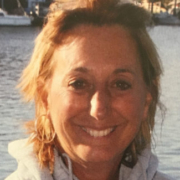
After Seacoast New Hampshire resident Dean Plager retired, he enjoyed spending more time sailing, but he also felt a need to give back to society. He read an article about a local woman who was advocating for abused and neglected children as a volunteer with CASA of NH. “It hit home for me because I had been looking for something to do that really makes a difference. This was it,” Dean says.

Court Appointed Special Advocates of New Hampshire – or CASA of NH – recruits, trains and supervises volunteers to serve as advocates for abused and neglected children in the New Hampshire court system.  Volunteers spend time getting to know a victimized child and the important adults in that child’s life so they may make qualified, unbiased recommendations to a judge deciding a child’s future.  Since CASA of NH was founded in 1989, its volunteers have helped more than 10,000 children grow up in safe, permanent homes.

More than 55 percent of CASA of NH’s 600 volunteers last year were over 60 and almost 50 percent were retired or working part-time.  According to Marcia Sink, founder and President/CEO of CASA, women and men of retirement age play a key role in the organization’s goal to provide a CASA volunteer advocate to every abused or neglected child who needs one.

“We are expecting a surge in cases of abuse and neglect after the COVID pandemic passes and we need more volunteers now. Retired folks or people with flexible schedules are in a position to step up quickly, plus we find that our older volunteers have tremendous abilities that they still want to use during retirement. It is a good combination,” she says.

CASA volunteer advocate Darcy Horgan calls her work for CASA a “win/win,” commenting that “it engages my work ethic but has real meaning. At this stage of life, what a bonus it is to do valuable work that is fulfilling!”

Monadnock-area resident Patience Stoddard was a little bored in her second year of retirement. She attended a 40-hour training session to become a CASA volunteer advocate and found the training “exceptional.” She also discovered kindred spirits in her fellow classmates. “It makes you realize that there are a lot of good people out there. It keeps your faith in humanity,” she says.

As with other aspects of life, the COVID pandemic has altered CASA volunteer work. Training has moved online and advocates meet with children in safely distanced visits or, if the child is old enough, through virtual means. Some courts convene through telephone and web conferences while others offer socially distanced in-person meetings.

Steve and Betsy Coes were deep into training to become CASA volunteer advocates when the COVID pandemic hit. They completed their training online and received their first cases in Spring 2020. Steve says that he has been able to check on his one-year-old CASA child and do the work despite COVID. “Every time a new wrinkle arises, it is an education. Most of all, my CASA work is an education about what the world is like out there. You see how people get in situations and you start to understand motivations,” he says.

Want to learn more?  Read our FAQs about volunteering or join us for a live, virtual information session:
A Powerful Voice for New Hampshire’s Vulnerable Children

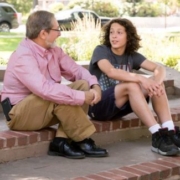
It was 1993 when Fred Hurwitz became aware of national statistics surrounding child abuse and neglect. Knowing he had to do something to support victimized children in his area, he began his search for a volunteer role where he could utilize his skills to make a substantial contribution. He came across a relatively new organization in New Hampshire called CASA and 25 years later he is still advocating for our state’s most vulnerable children.

Fred has served as a volunteer advocate for 18 children from 10 different families. His case experiences have allowed him to witness successful adoptions, reunifications and assist in providing teens who are aging out of the foster care system with important skills for adulthood. When you ask Fred why he continues to serve as a CASA volunteer advocate after 25 years, he says it is simply because he knows he is making a difference.

“CASA volunteer advocates know the children better than anyone else on the case,” Fred says.

“You stay with the children through the length of a case, and that is powerful.”

Fred speaks of his advocacy with pride and dedication for the children he has served. “When you do good work, the judges listen. You are influential,” he says.

As Fred speaks to new potential CASA volunteer advocates, he ensures that they know they will have the proper training and support to successfully be an advocate.

“Everything that you learn in the initial 40-hour training is reinforced throughout the length of your case,” Fred says.

Becoming a CASA volunteer advocate does take a fair amount of organization. When attending court hearings and meetings, Fred is sure to take notes and later expand on them in his court reports. His notes allow him to quickly refresh what has been happening on the case and cite easily to the judge which matters he feels are most important to communicate.

Throughout his 25 years, Fred has always maintained a full-time job. He says that while it takes planning, the time commitment of his advocacy can be very flexible.

“If you are prepared in court with a calendar, you can easily manage your schedule,” Fred says.

As Fred meets new potential CASA volunteer advocates and discusses how he has made an impact, he shares truthfully about his experience.

“Very few outcomes are perfect. You have to have the personality of ‘I know that I have improved the circumstances of the child,’” Fred says.

Reflecting on his prior cases, Fred talks about his most rewarding case involving a young sibling who suffered from abuse. Fred was there as the child made an incredible recovery after a severe trauma and began to flourish in her pre-adoptive home. With strength, resiliency and her CASA Fred by her side, this child was united with her new forever family for a safe, permanent future.

While Fred’s 25-years-and-counting commitment to CASA is a somewhat unique example, his compassionate and dedicated advocacy for New Hampshire’s children is similar to others. Whether CASA volunteer advocates take one case or ten before moving on, they all wish to make a profound difference in the life of a child. Their continuous, professional advocacy is crucial in CASA’s mission of reaching 100% of our state’s abused and neglected children. As a CASA volunteer advocate, every case that you will encounter will be different, but you will always be making a difference in the life of a victimized child.

Retired Teacher Heather Sweeney Finds New Opportunity with CASA

When Heather Sweeney was preparing to retire from her extensive career in education, she saw an ad on TV that caught her eye. It was for CASA of New Hampshire, seeking volunteers to serve as advocates for children caught up in abuse or neglect cases in New Hampshire’s family courts.

Having long been a champion of children, Heather knew this was something she wanted to do in her post-teaching life.

“I taught for 30 years and I have just seen family units get weaker and weaker, and the problems it is causing for students is just tremendous.”

From children who come to school hungry, or struggle with anxiety and depression, or lacking a warm coat for New Hampshire’s winters, Heather has provided as much as she can for these kids without overstepping her boundaries as a teacher.

“I always had food in my drawers for kids who came to school hungry. Or we had coats and warm clothing,” Heather said. “It just got to be so incredible.”

As a teacher, she said, there is only so much you are allowed professionally to do and say for children and families you suspect are struggling at home.

“I thought, ‘that will finally allow me to do the things that frustrated me over the years that I wanted to do for these kids,’” she said of the opportunity to be a CASA.

In 2016, Heather filled out the volunteer application to become a court-appointed special advocate and started the process. Following an extensive interview with staff, she was accepted into a 40-hour pre-service training required of all volunteers before they can take a case and begin working directly with a child.

Graduating from training in early November, it took less than a week for Heather to jump into her first case with a child whose parents had been reported for neglect. The parents, just young teenagers themselves, lack both the skills to care for a newborn and the support from their own parents to help them.

In her role as a CASA, it is Heather’s job to serve as the “eyes and ears” of the court, making independent, objective recommendations to the judge based on the information she has gathered through visits with the child, foster parents, parents, doctors and other important adults in the child’s life.

She has written court reports and attended court hearings where she is given the opportunity to share in-person her observations and recommendations regarding what she believes is in the child’s best interest.

CASA volunteers are trained to help the child navigate this process efficiently so he or she may find stability in a safe, permanent, loving home as quickly as possible while enduring the least amount of trauma and upheaval.

Though it may sound cliché, Heather said this work is simply a natural extension of her career because it’s what she has done on a different level for years.

“CASA provides me a vehicle to do all the things I wanted to do so badly for these kids as a teacher,” she said.

Certified to teach middle and high school, with degrees in art and science, Heather spent much of her career as an eighth grade science teacher in Merrimack. As a teacher she honed her skills in building a rapport with kids, and with parents. Both are incredibly useful as a CASA, she said. Particularly so on her case where it turns out the parents are kids.

“I’ve learned over the years to be patient with parents. Life is not easy,” Heather said. “I’ve also learned that all parents love their kids, they want to do the best by them, but sometimes it is just too stressful.”

And that, she said comes back on the kids and manifests itself in their behavior. It can make them insecure or self-conscious. It drives a defeatist attitude. As a teacher, you spend your career pushing students to be their best selves, to challenge them and produce the best work they can, she said. But trouble at home can stymy a child’s success in school.

“That’s why being a CASA is great. You can help them on another level,” Heather said. “You can be behind them in a way you couldn’t as a teacher.”

Newly retired, Heather said CASA was the perfect challenge in the next phase of her life. It encourages her to use her skills she’s honed as an educator, but provides a significant amount of flexibility. It’s not like school, where she had to be up early in the morning.

“You can sleep until 8,” she quipped.

She can still travel to see her children on the West Coast and in France, and she knows she has the support from the staff at CASA to guide her through the unknown.

But above all, it allows her to reach children in a new and rewarding way.

“It puts you in the trenches with these kids,” Heather said. “Now you can see what you could only guess. What you suspected as a teacher, you know as a CASA.”

Don’t Be Overwhelmed by the Thought of Being in Court

Name: Jennifer Adams

Town: Troy

How long have you been a CASA? I have been a CASA since 2009

Number of cases you’ve worked on: 7

Number of children you’ve worked with: 7

Why did you decide to become a CASA and why do you continue to give your time to CASA? I decided to become an advocate because I had recently changed careers. I went from working as a pediatric occupational therapist with special needs children in public schools, to working in my family’s business as an inn keeper. I was looking for a way to stay involved with children and the community. I felt that my knowledge and experience around child development would be a good fit with the CASA organization.

I continue to give my time to this organization because there are so many children in our community who are impacted by abuse and neglect. Now more than ever due to the increase of drug misuse, many children are getting caught up in the drama and upheaval of their parent’s lives. These children need someone who is focused on them and will speak on their behalf in the court system to try to insure they have the best outcome possible, enabling them to grow and develop in a safe and nurturing home.

Tell us about a learning experience you’ve had as a CASA. I have learned a lot about the court system, DCYF and Easter Seals. I have met many dedicated people who are working toward providing safe homes for kids as well as trying to help parents get the assistance they need to care for themselves and their kids.

Share a memorable outcome from one of your cases, or, if your case hasn’t closed yet, something positive you’ve seen come from your case so far. I worked with a mother whose child was removed from her care due to substance misuse and child neglect. This mother had struggled with alcohol for many years, but when this happened to her, it was the wake-up call she needed. It was amazing to watch her turn herself around and do everything she needed to do to get herself and her home back on track and to be reunited with her child. There are so many parents who are struggling with substance misuse and sometimes need a little help to make things right. It is so nice when they are able to do that and families can remain safely together.

What would you say to encourage someone who has been thinking about becoming an advocate? If you have ever considered becoming a CASA volunteer, just do it! There is such a huge need and you will feel great when you are part of a team that either helps a family become safe and stable again, reunites a child back with their parents or when you participate in finding a new forever home for a child.

Don’t be overwhelmed by the thought of being in court. It was an unfamiliar place for me at first, but the CASA staff is wonderful at training and supporting you at all times. CASA of NH is a fantastic organization to volunteer for. They care deeply for the children of this state and for their volunteers.

“Making a Difference in a Child’s Life is So Rewarding”

Name:
Pam Clark

Town:
Gilford, NH

How long have you been a CASA?
I have been a CASA since July 2011. I have been a Peer Coordinator for almost 3 years

Number of cases you’ve worked on:
9 cases personally; I have mentored CASA’s with 10 cases in all.

Number of children you’ve worked with:
14 children on my own cases. The children the CASA’s I mentor have advocated for 17 more.

Why did you decide to become a CASA and why do you continue to give your time to CASA?
As a retired teacher I wanted to continue to make a difference in children’s lives. I guess it makes me feel like a champion for children.

Tell us about a learning experience you’ve had as a CASA.
One of the most sobering things I have learned is that many of the “children” we advocate for are teenagers and what happens to them when they leave the foster care system without being reunited with their family. It is hard to know that they don’t have a family to celebrate birthdays, Christmas, Thanksgiving or other holidays with. Many of them have few resources and it has been a most difficult lesson to learn the hardship that struggling teenagers have to deal with.

Share a memorable outcome from one of your cases, or, on a case that hasn’t closed yet, something positive you’ve seen come from your case so far.
A local church was sending things to help out the family placement for the children I advocated for. There are 5 children in all and they have a small home. Their income is limited as their grandmother who is on disability cares for them. The church sent over brand new bedding for every child and when I drove in with it and asked the children to help me bring in brand new sheets, blankets and pillows, the 8-year-old boy took one of the pillows and said , “Can I have one too?” It is hard for us to imagine when a child is excited over the prospect of a new pillow. Giving to children who are so appreciative for everything you do because they often have so little is so heart-warming.

What would you say to encourage someone who has been thinking about becoming an advocate?
Being involved in making a difference in children’s lives is so rewarding. There are so many options facing the judges on how they can impact the lives of children who are affected by neglect and abuse. But how would they know what is best for the children unless someone who cares and understands what that child’s life is like on a day to day basis tells them? When you can explain to the judge what the child you are advocating is facing, seeing and feeling, then you are giving the child a voice that the court will appreciate when they make decisions.

Keeping the Child’s Well-Being Front and Center

Name:
Ken Gifford

Town:
Manchester, NH

How long have you been a CASA?
I accepted my 1st case in July 2014 on the last day of my CASA training.

How many cases and how many children have you advocated for?
I’ve been appointed to 4 cases as a CASA-GAL. Each case had 1 child.

Why did you decide to become a CASA and why do you continue to give your time to CASA?
Jim Polcari, a Massachusetts attorney and advocate for abused/neglected children, has been my friend for a long time. Jim’s life of selfless, caring, child-focused advocacy inspired me to become a CASA-GAL.

Time steadily creeps forward while NH Courts and DCYF attempt to preserve the family unit and rehabilitate adults who inflicted physical or mental injury, sexual abuse, exploitation or neglect upon a child. While this is occurring, the development and maturation of the child-victim is also occurring. When preservation of the family unit and rehabilitation of adults trumps the day-to-day well being of harmed children, an opportunity exists for CASA-GAL volunteers to intervene and make a positive contribution on behalf the child. The child’s biological clock and the child’s development and maturation don’t pause and take a break while the child’s parents, the Court and DCYF attempt to address the parent’s problem(s). CASA-GALs keep the children’s well being in the fore.

Tell us about a learning experience you’ve had as a CASA.
Parents suffering from mental illness, substance abuse and, or alcoholism are often depressed. They face lots of other challenges in their lives. Although each individual’s story and journey is unique, they all share a love for their children that is incredibly powerful. Sometimes a parent’s love and affection for a child is so strong it prevents the parent from being able to recognize and acknowledge their own responsibility in the situation that resulted in an abuse/neglect charge being filed against them. Most parents in the cases I’ve had told me that they love their children more than anything else in the world, including themselves. I’ve learned that it’s necessary to verify information I’m told by parents who don’t accept responsibility for their actions instead of simply accepting it as being truthful because they insist their love of their children implies their version(s) of the story must be correct.

Share a memorable outcome from one of your cases, or, if your case hasn’t closed yet, something positive you’ve seen come from your case so far.
A middle-school student in an educational neglect case was suffering from infected gums and periodontal disease, which interfered with his ability to interact and make friends with his peers and contributed to an excessive amount of truancy and absenteeism. DCYF and the mother’s attorney presented arguments that the child’s dental problems were being addressed and weren’t relevant in an educational neglect case. We (CASA of NH) prevailed in arguing that the child was not receiving the care he needed and played a role in helping him have his periodontal disease treated.  This improved the child’s social life and contributed to increased school participation. It also helped improve his mother’s relationship with him and the school.

What would you say to encourage someone who has been thinking about becoming an advocate?
NH children didn’t start to be abused and neglected as a result of the opioid crisis. The opioid crisis has simply exacerbated the abuse and neglect of children in NH. The parents in these cases struggle to care for themselves. In these situations their abused and neglected children are innocent victims. CASA-GAL volunteers with the support and assistance of CASA of NH help inform the Courts about what’s actually happening in the case with an emphasis on the children’s well being. Although these cases are about the children most of the time the focus in a court hearing is on the rehabilitation of the parents and the parent’s participation and progress. As a CASA-GAL you try to help the court and DCYF stay focused on the child to help prevent a loss of big picture.

Kristin Faxon: Be the Person You Needed When You Were Younger

I have been volunteering as a New Hampshire Court Appointed Special Advocate Guardian Ad Litem since 2013 and have been assigned to one child’s case during that time. CASA of NH is part of the national nonprofit organization National CASA and helps to ensure abused and neglected children in New Hampshire have a voice in the court system and their best interests are represented. According to the National CASA website, “last year, more than 76,000 CASA and guardian ad litem volunteers helped more than 251,000 abused and neglected children find safe, permanent homes.”

CASAs are not attorneys or required to have intimate knowledge of the legal system, but are every day citizens. To become a CASA GAL, I went through 40 hours of training that taught my classmates and I about the New Hampshire court system, court report writing, childhood development, issues/scenarios I may encounter with children and their families and ways to handle these scenarios. The training was thorough and comprehensive, but still did not fully prepare me for what I would feel and experience when I took my first case.

When I was assigned my first case in 2013, it was very eye opening to me to realize the types of situations children in the state are experiencing. As a CASA, I am expected to meet with my child and all the people in my child’s life, including teachers, relatives, parents and anyone else that may be involved, to learn what is going on now, and leading up to the court finding. I attend education meetings, team treatment meetings, meetings with my child’s Division of Child, Youth and Family services worker, family visits and more. I  meet with my child at least once a month, and through these visits over the years, I have developed a relationship with her through hours of talking, playing basketball, running, eating ice cream and various other things we have done together.

I have seen her grow up, from an angry little girl to a strong woman. Her resilience, ability to advocate for herself and cope with what has happened to her continue to amaze me and make me want to fight harder for the things she needs. I come from a nuclear family and never experienced any type of neglect or abuse in my home. Learning about her experiences in life, seeing these things occurring and being intimately involved in the situation has given me an empathy and investment in her, my community and those that live in it, that I did not have previously. It has exposed me to the struggles that families and children both have that are so powerful and so unlike my own experience.

Along with expanding my awareness of the issues going on with families in my state, I have learned about the court system and the process that abuse/neglect cases must go through. Speaking publicly in court or in meetings in confidence, and advocating for the needs of my child has become easier and something I have become more skilled at with time.  It has amazed me that when you believe in something and someone so strongly, you are willing to overcome your trepidation to make sure the issues are heard. Your need for comfort is secondary to the needs of the child you are responsible for representing. You are their voice; you are their chance at change. You are the difference. That is powerful and unlike any other thing I have been involved with.

Being a CASA not only improves skills such as negotiating, conflict resolution, public speaking, writing and interpersonal relations, but also builds you up as person, sometimes breaking you down, but ultimately making you stronger in ways you did not know were possible. To help you understand these changes and ways to deal with things you may be struggling with as a CASA, you have a full time, professional supervisor to consult with and there are support groups that you can attend comprised of other CASAs to surround you. You are not alone in the journey, but have support to see you through it.

Volunteering as a CASA has formed me into an entirely different person who is more aware and empathetic to things going on around me and who wants to advocate for change. One of the mottos that I have connected with through my experience as a CASA is “become the person you needed when you were younger.” As a person that did not have abuse or neglect in my life, I still wish I had someone other than my family and friends to help me navigate things I was going through. The children that we work with are experiencing really rough times and need people who care, and who are willing to help navigate the system they are in and the things that are going on around them. CASAs can be those people.

By Kristin Faxon, CASA Advocate